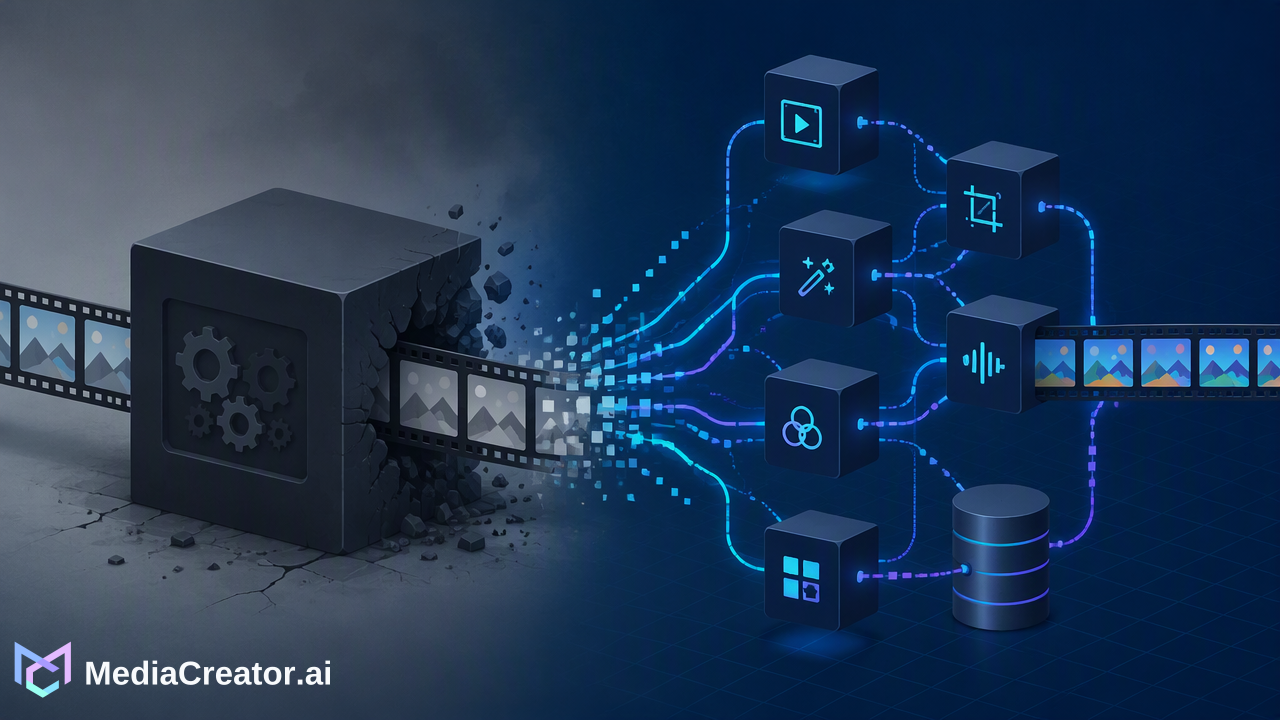
Managing Deterministic State Persistence in Distributed Generative Media Pipelines
Achieving consistent output across distributed inference nodes requires decoupling the random seed state from the execution environment.
Sep 10, 20265 min read1
Search for a command to run...
Achieving consistent output across distributed inference nodes requires decoupling the random seed state from the execution environment.
Achieving temporal coherence in generative video requires moving beyond frame-by-frame inference to a state-aware interpolation strategy that manages latent vector trajectories across sequential inference steps.
High-concurrency generative media pipelines often suffer from non-deterministic OOM errors due to memory fragmentation; implementing a custom memory pooling strategy and request-level isolation is essential for maintaining system stability.
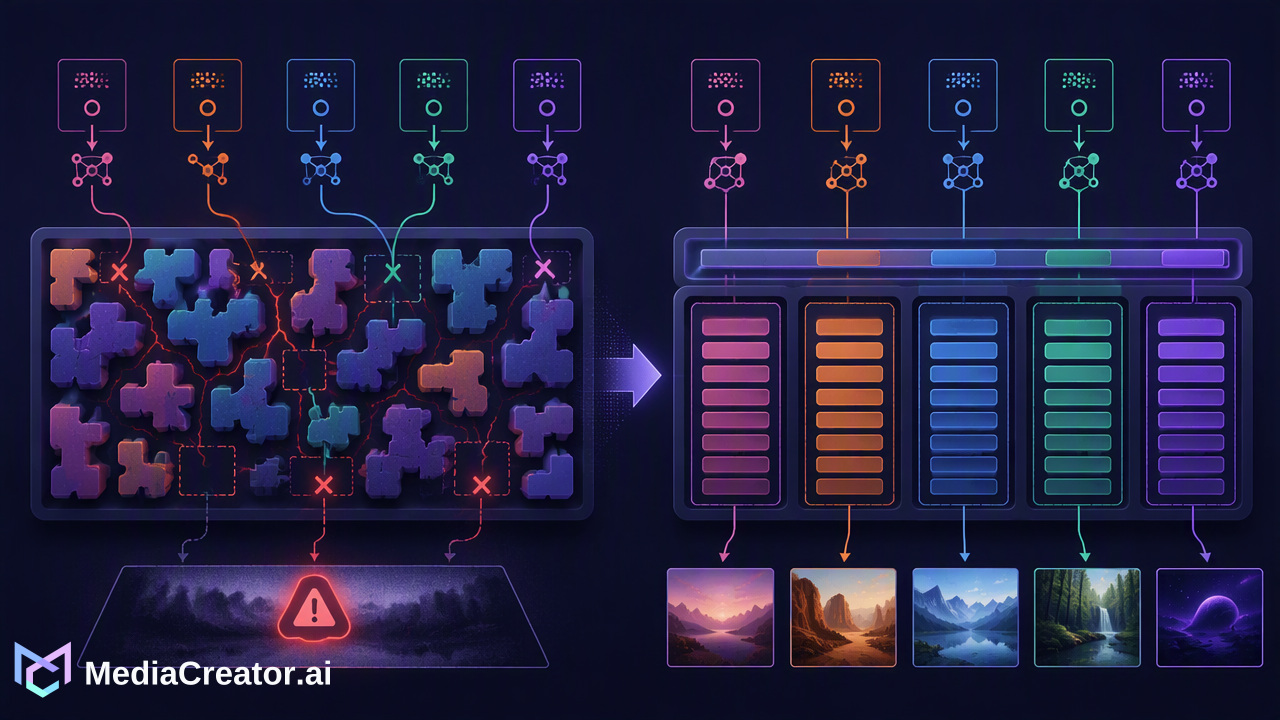
High-throughput generative media pipelines often suffer from memory fragmentation when handling heterogeneous request sizes, necessitating custom memory pooling strategies to maintain stable inference latency.
Achieving consistent output across distributed inference nodes requires decoupling the generation state from the execution environment through a centralized, immutable metadata schema.
Migrating Legacy Media Processing Pipelines to Latent-Space Inference Architectures For years, media engineering has relied on deterministic, pixel-based pipelines. Whether using FFmpeg, GStreamer, or

Achieving consistent generative outputs across distributed inference nodes requires strict synchronization of random number generation states and floating-point precision handling.
Achieving temporal stability in generative video requires decoupling the inference execution from the frame-stitching process through a robust message-queue architecture and deterministic seed management.
Migrating legacy media processing pipelines to distributed architectures requires a fundamental shift in how state, concurrency, and data locality are handled to prevent performance degradation.